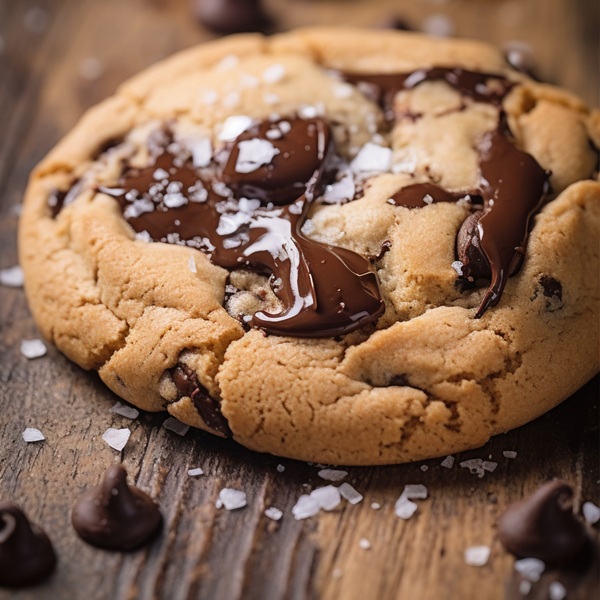
Bakery flavours for baked, filled, and decorative goods
Perfect for biscuits, cakes, laminated pastries, toppings, fillings, and icings.
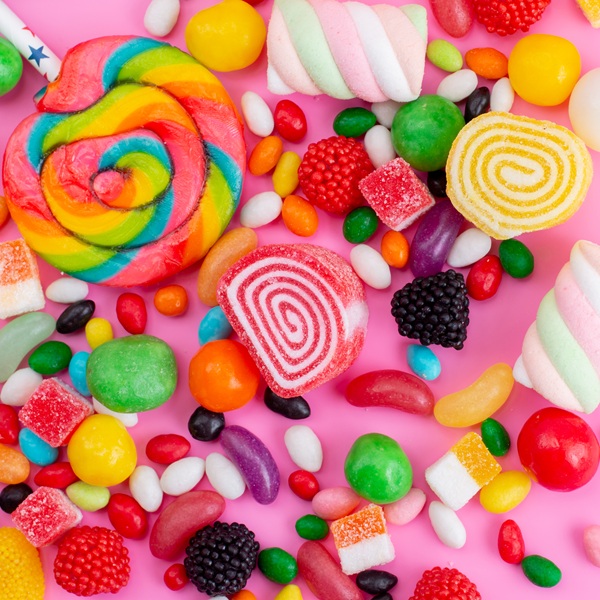
Confectionery flavours for candies and soft sweets
Ideal for hard candies, chocolates, fondants, jellies, gummies, and marshmallow.
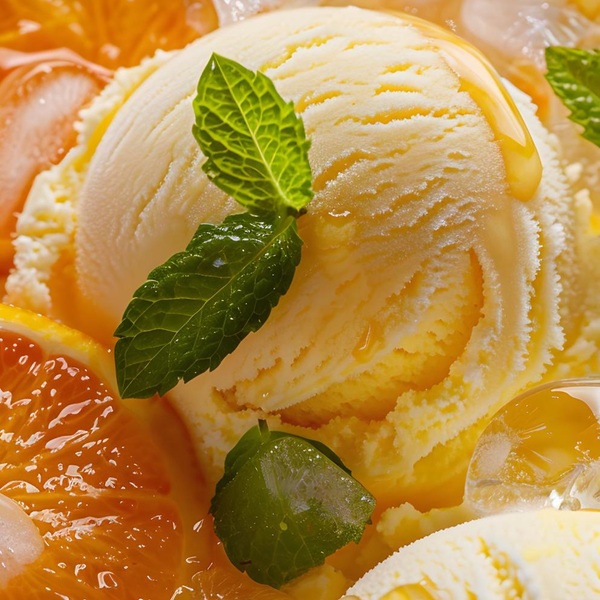
Dairy flavours for fresh and frozen desserts
Tailored for ice cream, frozen desserts, yoghurts, smoothies, and alternative dairy.
Beverage flavours for still and sparkling drinks
Formulated for carbonated and still beverages, punch, cocktails, and syrups.
Classic biscuit flavours, amplified for modern taste
Instantly recognisable and universally loved. Made to be enjoyed by the whole family.
Gummy flavours that spark personality & preference
Vibrant and different. Designed to match moods, personalities, and contexts.
Childhood ice cream flavours with adult richness
Rich and nostalgic. Built to make ice cream taste the way it does in memories.
Soft drink flavours made to enjoy everyday
Flavour-first and genuinely refreshing. Developed to be reached for again & again.
Insights
Flavour trends 2027: the four forces shaping food & beverage
October 23, 2026
It took salted caramel thirty years to travel from a Breton chocolatier's kitchen to the supermarket shelf. Ube covered the same ground in months, not decades. The time it takes for a flavour to go viral and your customer expecting it on shelf has shrunk to weeks, but most brands are still running on a model built for the slower world.
The model of "wait for a trend to show up in sales data, then find the closest match in an existing catalogue", worked when flavours took a generation to arrive. Now briefing and sampling can take longer than the trend itself lasts, and by the time a profile is signed off, the moment that made it exciting has often already passed.
Senovia's white paper, Your 2027 flavour forecast through a cultural lens, maps the forces reshaping taste through to 2027, names the flavour profiles worth developing for each, and sets out how to get ahead of them. Below, we cover the essentials.
Taste now runs on two clocks
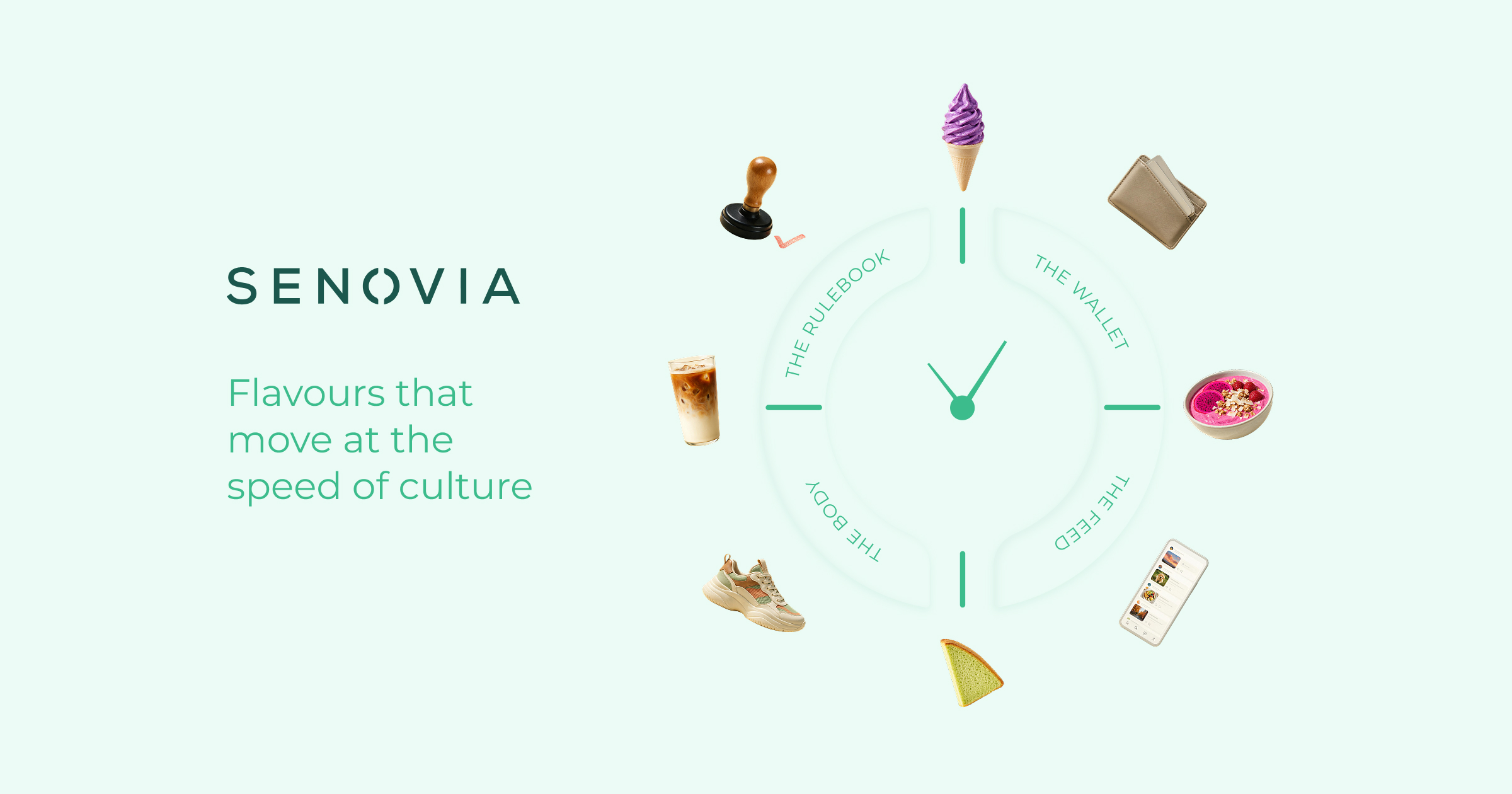
Speed is only half the picture. Consumer taste moves on two clocks at once now: the fast clock and the deep clock.
The fast clock is the trend cycle. A flavour catches the social media feed, and suddenly your customer assumes you stocked up on it yesterday. It is all noise and urgency: the queues, the sell-outs, the profile everyone wants at once. And it punishes hesitation.
The deep clock moves slower but decides more: the shifts in health, economics, and regulation that reset what people fundamentally want, over years. They are easy to miss until they become the whole conversation. A competitor cannot copy them in a fortnight, so they are where lasting advantage sits.
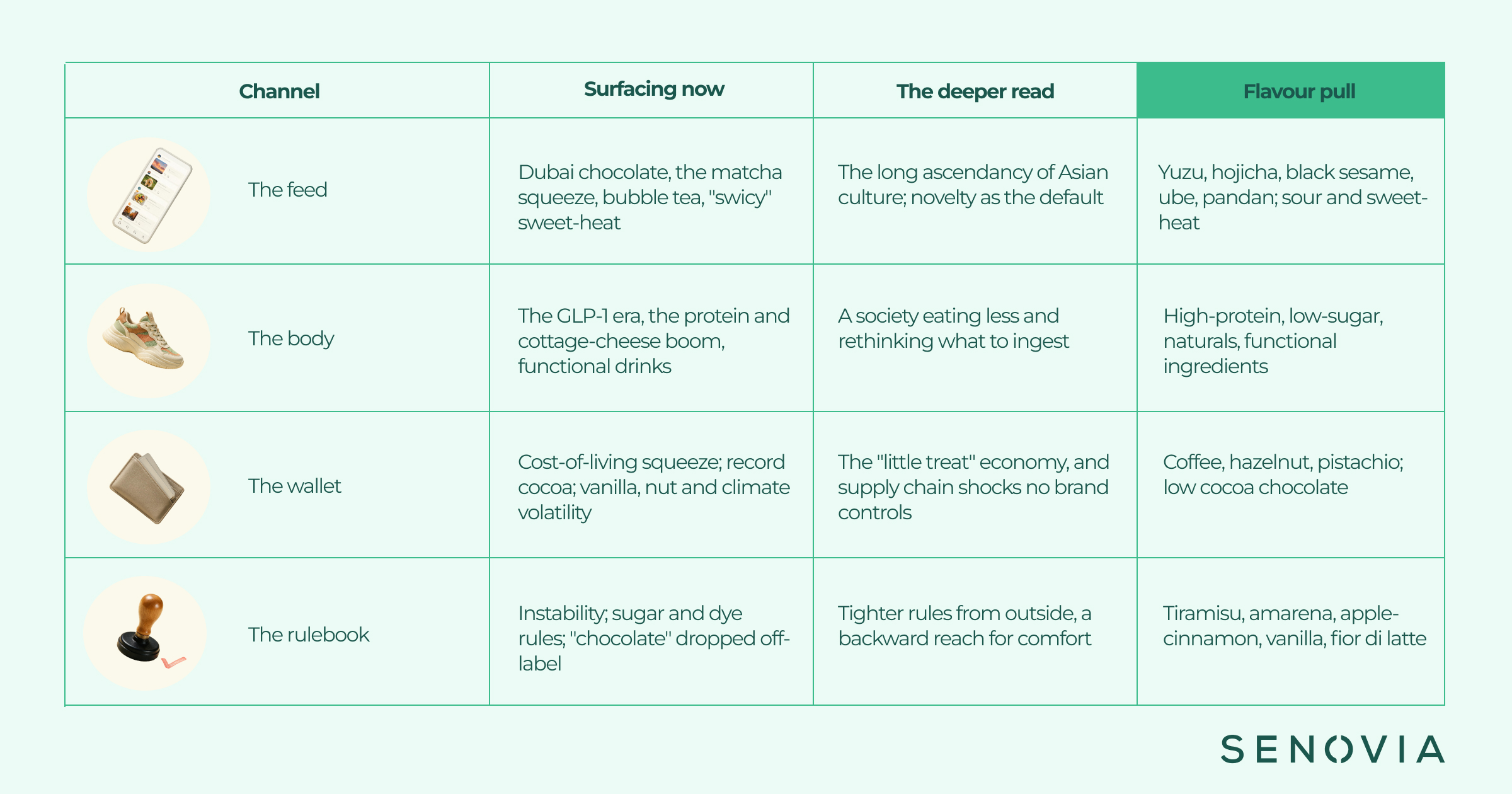
Four forces drive those shifts across both clocks, each working through its own channel.
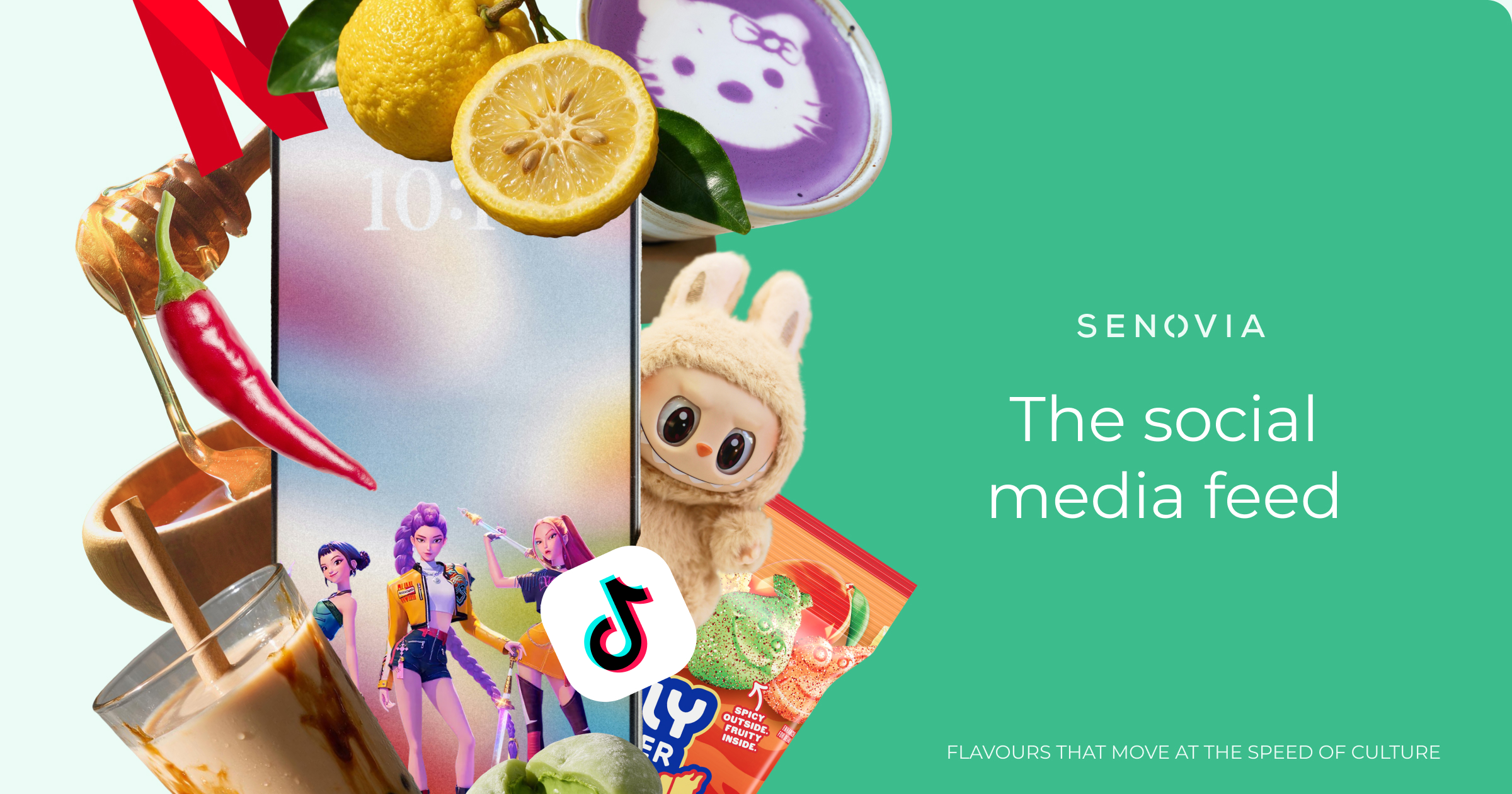
The social feed: Asia is the new mainstream
Viral hits come and go, but the ones that stick are almost all drawing from the same source: the steady rise of Asian culture into the mainstream, from K-pop to Pop Mart's Labubu. Matcha, bubble tea, Dubai chocolate, ube… each started as a TikTok moment, and each is settling in as a mainstream expectation. Yuzu, hojicha, black sesame, and pandan are following the same path. The hotteok Oreo, launched across eighty countries in May 2026, is the clearest sign yet that Asian flavour influence has moved from niche to assumed.
The appetite the social feed builds also skews intense. A generation raised on doom-scrolling and endless content treats novelty as a given, so the profiles that travel are bold and loud: extreme sour, sweet-savoury mash-ups, and a growing strain of sweet-heat that pairs fruit with chilli. Knowing which of these flavour profiles stick around and which fizzle out is the harder call, and it is the one we forecast channel by channel in the paper.
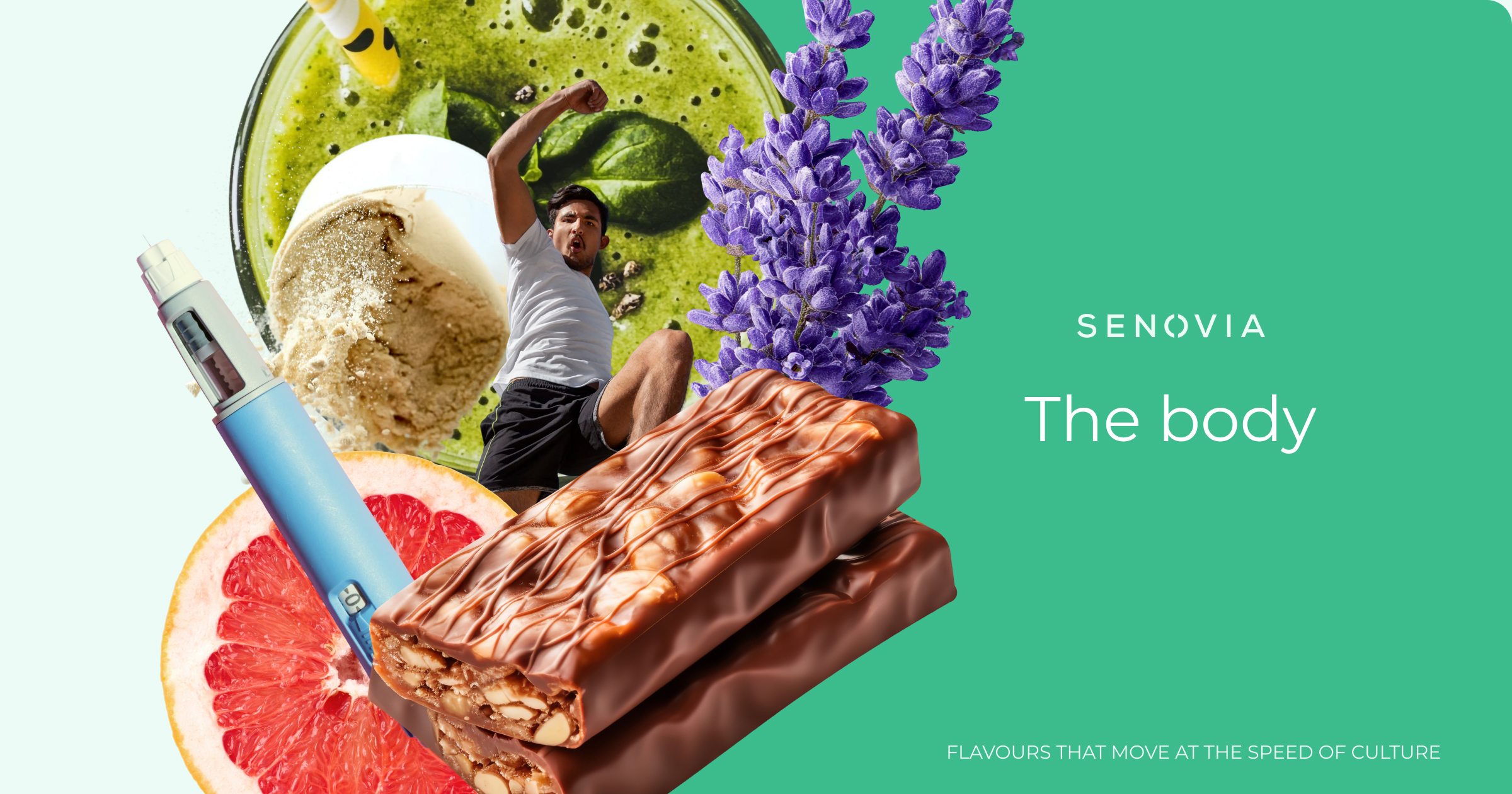
The body: less sugar, louder flavour
The body is changing what indulgence even means. Around one in eight US adults now takes a GLP-1 weight-loss medicine that suppresses appetite and dulls sweetness sensitivity, with uptake climbing across the UK and Europe too. A shopper eating that way buys smaller portions and more protein, and wants sweetness that lands in two bites rather than ten.
GLP-1 is the sharpest of several signals. Glucose tracking has left the clinic: over-the-counter monitors now sell to people without diabetes who simply want to see how a snack moves their blood sugar, and sweetness becomes something to watch rather than reach for. Running alongside it is the pull towards protein, fibre, and a functional payoff.
As a result, people want the pleasure of sweetness with less of the sugar, in a smaller format, often tied to a function: a focus blend, an energy hit, or a calming note. For flavour, that means bolder, more immediate profiles engineered to land fast. The hard part is holding flavour together as sugar and fat are reduced and protein and fibre are added, without the dryness and off-notes that usually follow. The specific flavour-and-function pairings that deliver, and how to rebuild sweetness convincingly at lower levels, are where the paper goes deeper.
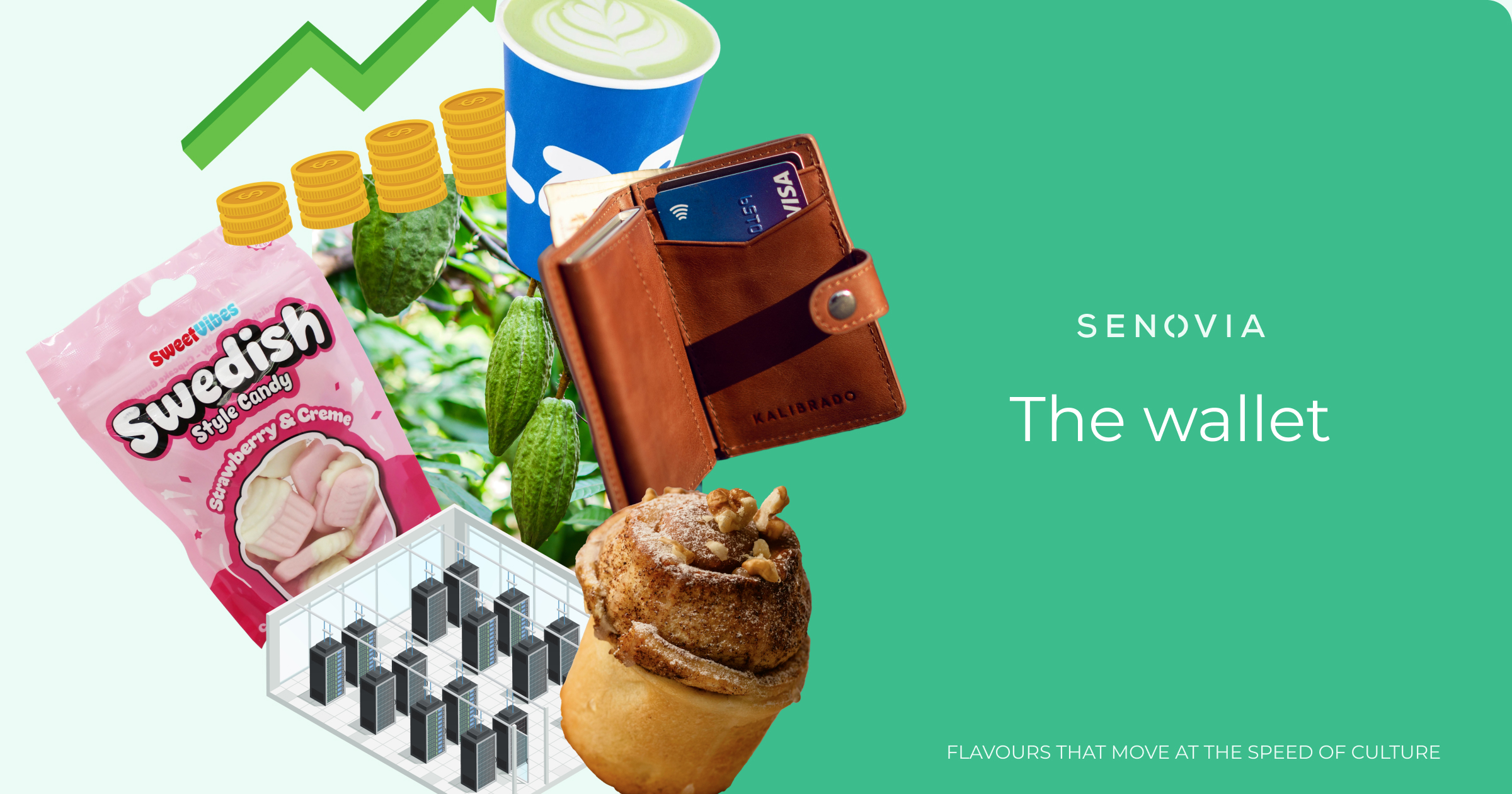
The wallet: the little treat, squeezed from both sides
The wallet is pulling in two directions. The cost-of-living squeeze has created a "little treat" economy, where people cut the big spend but ritualise the small affordable indulgences, like the daily latte or the high-quality chocolate. That drives demand for richer, more comforting profiles like coffee, cinnamon, and crème brûlée: the taste that makes a small treat feel worth it.
Behind the scenes, though, that treat is getting harder to make. Supply shocks across cocoa, vanilla, and nuts are forcing permanent reformulations rather than temporary fixes, and a newer pressure is building on top of the climate strain. AI data centres compete for the same water and land that agriculture depends on. Several major brands have already quietly dropped the word "chocolate" from their labels to stay within both regulation and the budget. Which substitutions hold the indulgence and which fall flat is a question we take further in the full forecast.
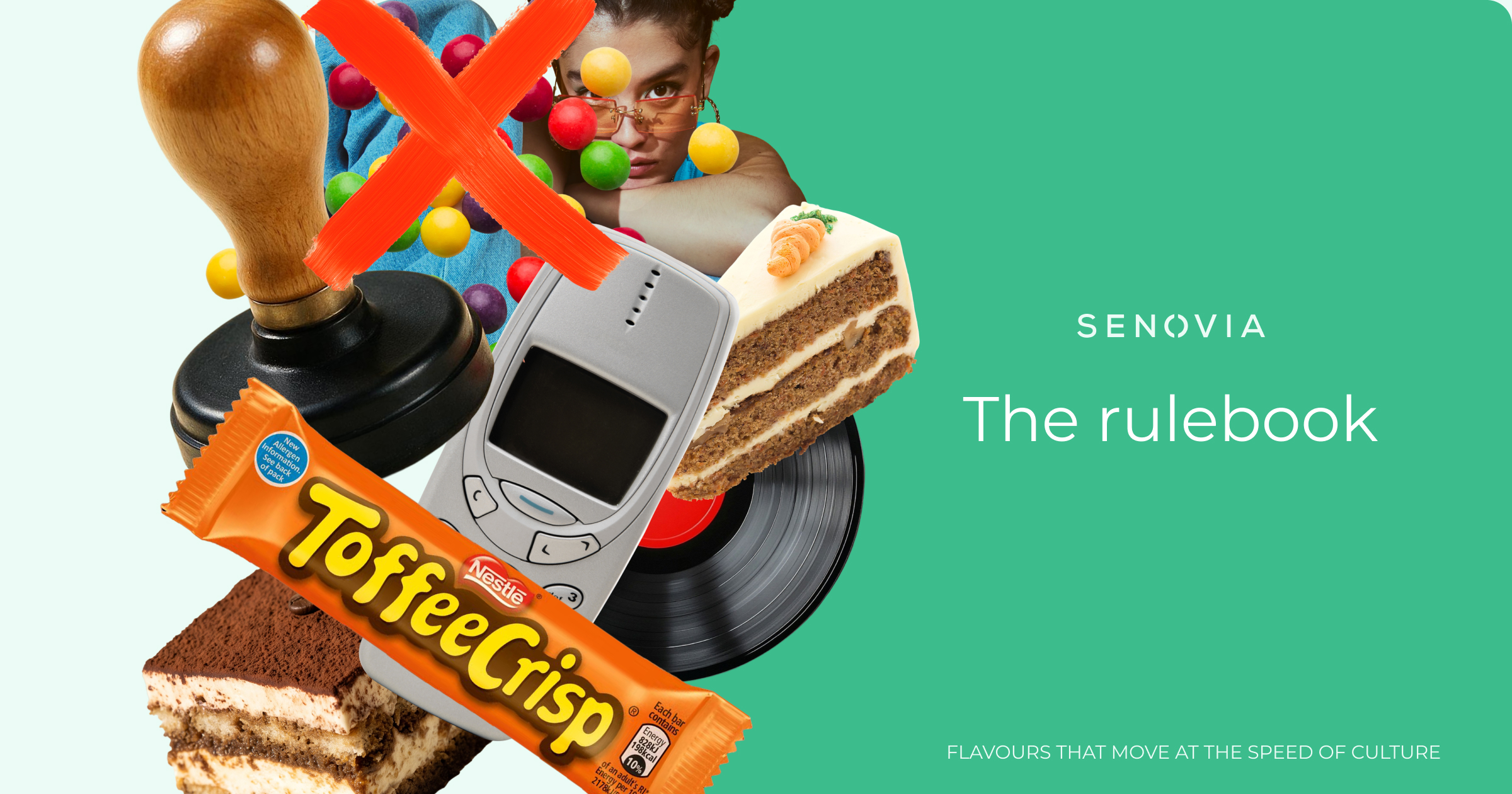
The rulebook: tighter rules, softer flavours
The rulebook tightens from outside while culture reaches inward for comfort. Sugar levies are ratcheting up, synthetic dye bans are rolling through the US, and clean-label expectations are tightening every ingredient list. A new rule resets a recipe for good, requiring reformulations to match the incumbent.
Meanwhile, anxious times drive a hunger for the familiar. It shows up everywhere from reunion tours of once popular boy and girl groups to the Y2K revival. On the plate, it arrives as nostalgia. Tiramisu, amarena, apple and cinnamon are the tastes of a softer-feeling past. The craft it asks for is a strange one: sweetness without the sugar, colour without the old dyes, and comfort built into a cleaner, leaner recipe.
The forces don't take turns
The four forces are already stacking, and they will land hardest on the brands least prepared to move dynamically. A single product can face a supply shock, a sugar-reduction deadline, a viral profile its customers suddenly expect, and a GLP-1 shopper buying smaller, all in the same quarter.
So, what does a brand actually do about it? That is the question Your 2027 flavour forecast through a cultural lens is written to answer. It maps all four forces through to 2027, with flavour forecasts by channel, the formulation challenges behind each, and the case for building tomorrow's flavour before the brief that names it exists.